GemRaid - Free spins, coins, and gift codes that actually work.GemRaid - Free spins, coins, and gift codes that actually work.GemRaid - Free spins, coins, and gift codes that actually work.GemRaid - Free spins, coins, and gift codes that actually work.
How Roblox Accounts Get Hacked (And How to Actually Stop It From Happening to You)
Learn how Roblox accounts actually get hacked—session hijacking, HAR file scams, phishing—and the exact steps to secure yours and recover if compromised.
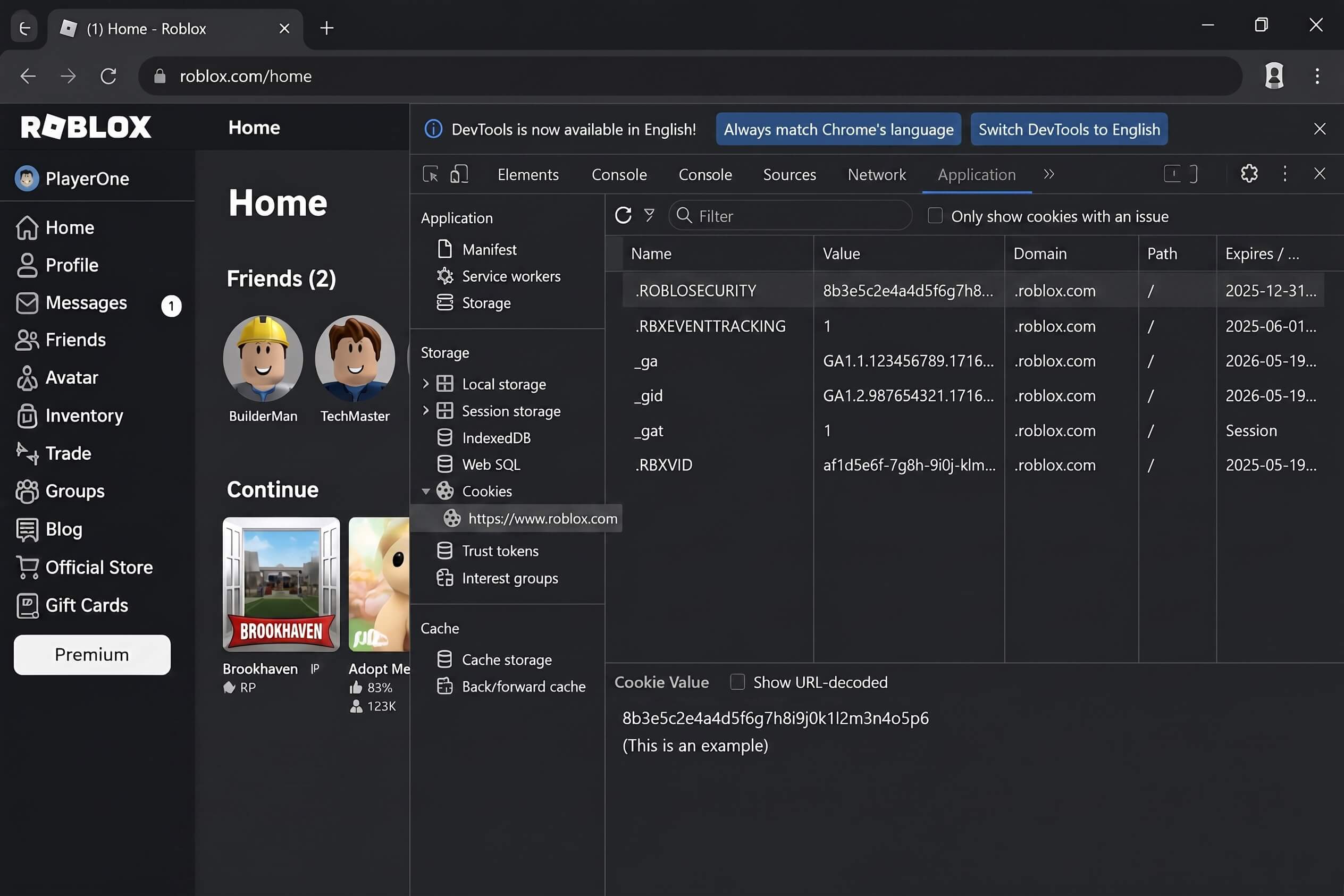
If you’ve searched “how to hack a Roblox account,” here’s the truth you need first: nobody’s guessing your password anymore. Password guessing is slow, and Roblox’s rate-limiting kills it fast. The accounts getting stolen in 2026 are getting stolen through your session token — the little string of data that proves you’re already logged in. Steal that, and an attacker walks past your password and your two-factor authentication without touching either one.
I’m going to break down exactly how these attacks work — the same methods security researchers and Roblox’s own DevForum have documented — and then spend just as much time on how to lock your account down so none of it works on you. No fluff, no scare tactics, just the mechanics and the fix.
Tags
Written by Alex Rider
Hey, I'm Alex—GemRaid's Roblox guy. I write no-nonsense field-tested guides and listicles to help you play smarter, cut the fluff, and get more out of every game.
You might also like
More guides and updates to help you stay ahead.
The short version
Modern Roblox account theft almost never involves cracking a password. It involves stealing your .ROBLOSECURITY cookie — the session token your browser holds after you log in — through phishing, malware, or social engineering. Whoever holds that cookie is you, as far as Roblox’s servers are concerned, MFA and all. The fix isn’t a stronger password. It’s controlling who ever gets access to that token, and knowing how to kill it instantly if someone does.
Why your password isn’t the target anymore
Every time you log into Roblox, the platform checks your credentials, runs your MFA challenge if you have one set up, and then — once you’ve cleared both — issues your browser a session cookie called .ROBLOSECURITY. From that point on, every request your browser sends (loading your inventory, joining a game, changing a setting) gets waved through because it’s carrying that cookie. Roblox doesn’t make you re-enter your password and 2FA code every five minutes. That would be miserable. So the token does the work.
Here’s the part that should worry you more than a weak password: MFA only checks your identity at login. Once the cookie’s issued, MFA is done doing its job. If an attacker gets a copy of that cookie — through any method, without ever seeing your password — they can drop it into their own browser and instantly become you. No login screen, no OTP prompt, nothing to bypass because they already skipped the part MFA protects.
That’s why every method below is really just a different way of getting at that one cookie.
How attackers actually go after that .ROBLOSECURITY cookie
Session hijacking through stolen cookies. This is the umbrella category. Once an attacker has your .ROBLOSECURITY string — however they got it — they paste it into their own browser session and they’re in. No password needed, no 2FA prompt triggered, because from the server’s perspective, an already-authenticated session just kept going.
The HAR file scam
This one’s sneaky because it looks like tech support. A HAR (HTTP Archive) file is a debugging log your browser’s developer tools can export — it’s a legitimate tool engineers use to troubleshoot slow-loading pages or failed trades. Scammers pose as Roblox support, a trade partner, or someone “fixing” your avatar rendering, and ask you to open developer tools, export a HAR file, and send it over. The catch: a HAR log captures every network request your browser made, including the authorization headers — which means your live .ROBLOSECURITY token is sitting right there in the file, in plain text. You hand it over, they extract it, you’re compromised. If anyone ever asks you for a HAR file, screen recording of your network tab, or your browser console output — that’s the scam, full stop.
Phishing sites and reverse proxies
The crude version is a fake login page on a typosquatted domain (roblqx.com, robl0x-rewards.net, that kind of thing) baited with a fake giveaway or “your account has been flagged” message. The advanced version uses reverse-proxy tools like Evilginx, which sit between you and the real Roblox login servers. You type your actual password and your actual MFA code into what looks like Roblox — and it genuinely relays those to Roblox’s real servers in real time. Roblox grants access and hands back a valid session cookie, and the proxy just intercepts it in transit before quietly redirecting you to a normal-looking page so you never notice anything happened. This is the version that beats hardware 2FA that isn’t domain-bound, because it’s relaying your real one-time code the instant you type it.
Infostealer malware and fake mods
Trojanized “FPS unlockers,” graphics tweaks, auto-farming scripts, and trading bots get passed around Discord servers and shady download sites. Once you run one, it quietly scans your browser’s local storage and cookie databases, pulls out any Roblox session tokens it finds, and ships them off to the attacker automatically — sometimes within seconds. Malicious browser extensions do the same thing with elevated permissions, reading cookie data straight out of your browser. Neither of these need you to type anything or click a fake login page — the damage happens the moment you install the software.
Credential stuffing and brute force
The old-school method still works, just not against people with unique passwords. Attackers run massive databases of leaked username/password combos from other breached sites against Roblox’s login endpoint, betting that you reused a password somewhere. Straight brute-force guessing against a single account is largely blunted by rate-limiting, but stuffing leaked combos at scale across millions of accounts still catches plenty of people.
Also read
SIM swapping
Rare, but it’s aimed squarely at high-value targets — accounts sitting on rare limiteds or admin rights over a developer group with real revenue flowing through it. The attacker social-engineers your mobile carrier into porting your phone number to a SIM card they control, then intercepts your SMS one-time codes to complete a password reset. This is exactly why SMS-based 2FA is the weakest form of two-factor you can use.
What happens after they’re in (and why speed matters)
Compromised accounts don’t sit idle. The moment an attacker has a working session token, automated scripts typically move through this fast:
Audit the account — scripts query Roblox’s own APIs to check Robux balance, inventory value, and any group ownership rights tied to the account.
Liquidate items — rare collectibles get traded out through a chain of secondary accounts to obscure the trail, then resold on gray-market sites.
Hijack groups and games — if the account owns a developer group or a published game, ownership gets transferred out, redirecting any ongoing revenue.
Resell the account itself — once it’s been stripped, the account shell gets listed for sale based on its age, rare badges, and tenure.
Attackers move within minutes of getting a token because they know a “Log Out of All Other Sessions” click kills their access instantly. Speed on their end is exactly why speed on your end — the moment something looks wrong — matters just as much.
How to actually protect your account
This is the part that matters more than any of the above. Here’s what shuts each of these attacks down.
If you think you’re already compromised, do this first: - Go to Account Settings and hit Log Out of All Other Sessions, or reset your password (either one invalidates every active .ROBLOSECURITY token immediately, wherever it’s being used). - Set up a Security PIN under Parental Controls. Even if someone’s already sitting inside a hijacked session, they can’t change your password, recovery email, or 2FA settings without that PIN.
To keep it from happening in the first place: - Never export or send a HAR file, console log, or network tab recording to anyone. Treat it with the same paranoia you’d treat your password — because functionally, it is your password. - Switch off SMS-based 2FA. Use an authenticator app (TOTP) at minimum, or a hardware security key (FIDO2/WebAuthn) if you’re protecting a valuable account or a developer group. Hardware keys verify the actual domain during login, which is what makes them immune to reverse-proxy phishing — the proxy simply can’t relay a hardware key challenge the way it can relay a typed OTP. - Double-check the URL before you log in anywhere. Roblox’s real domain is roblox.com. Anything with extra characters, hyphens, or a different TLD promising free Robux is a phishing page. - Don’t install “mods,” FPS unlockers, or auto-farming tools from Discord links or third-party sites. If it’s not on Roblox’s own platform or a verified source, assume it’s bundled with an infostealer until proven otherwise. - Audit your browser extensions periodically. Remove anything you don’t actively use or don’t fully trust — extension permissions can read cookie data directly. - Use a password manager and a unique password for Roblox. This kills credential stuffing outright, since a leaked password from some other site becomes useless. - Run active antivirus/endpoint protection and scan anything you download before you run it. If you do get infected, disconnect from the network immediately — that cuts off the malware’s ability to exfiltrate anything further. - Lock down your mobile carrier account with a PIN or port-freeze if you’re holding anything valuable, to make SIM swapping harder to pull off.
Quick reference: threat vs. fix
If the attack is…
Your defense is…
Cookie/session theft
Log out of all sessions regularly; short, unique passwords aren’t enough — the fix is session hygiene, not password strength
HAR file scam
Never send network logs or console exports to anyone, ever
Phishing / reverse proxy
Check the URL every time; use a hardware security key (FIDO2/WebAuthn)
Infostealer malware
Don’t run untrusted mods or extensions; keep antivirus active
Credential stuffing
Unique password per site, ideally via a password manager
SIM swapping
Avoid SMS 2FA; add a carrier PIN if you’re a high-value target
FAQ
Can someone hack my Roblox account just from my username? No. A username alone gives an attacker nothing to work with. They need your session token, your password, or a foothold on your device through malware — a username by itself doesn’t get them any of that.
Does changing my password stop a session hijack? Yes — a password reset invalidates existing session tokens, which is exactly why it’s the first move if you suspect you’re compromised. Do it immediately if anything looks off.
Is 2FA useless against these attacks? Not useless — it’s still your best defense against basic credential stuffing and simple phishing. But standard app-based or SMS-based 2FA can be bypassed by reverse-proxy phishing and cookie theft because both happen after MFA already passed. Hardware security keys are the one form of 2FA that resists this, since they verify the actual domain.
What do I do if I already sent someone a HAR file or clicked a phishing link? Reset your password and log out of all sessions immediately, then set up a Security PIN and switch your 2FA to an authenticator app or hardware key. Don’t wait to see if anything looks wrong first — by the time it does, items are usually already gone.
Are third-party “Roblox account checkers” or “recovery tools” safe to use? Treat any tool that asks for your password, cookie, or a HAR file as a scam, regardless of what it claims to check or recover. Roblox never needs that information handed to a third-party site.